If you are choosing a custom lot in Colvard Farms, the lot itself can shape almost every major decision that follows. A beautiful homesite may still create challenges with drainage, tree preservation, driveway placement, septic feasibility, or outdoor living plans if you do not evaluate it carefully up front. The good news is that a disciplined review process can help you spot trade-offs early, protect your budget, and choose a lot that truly fits the way you want to live. Let’s dive in.
Why lot selection matters in Colvard Farms
Colvard Farms is not a typical neighborhood of small, uniform lots. It is an established private community in southwest Durham with more than 400 acres, and current community materials say about one-third of the property is intended to remain permanent green space.
That setting is a big part of the appeal. Current marketing also highlights trails, a pool, clubhouse, tennis, and access near Jordan Lake recreation, along with proximity to Southpoint, I-40, I-540, and I-85.
For estate buyers, the current offering is especially limited. As of June 2024, the estate homesites are presented as two gated options: The Ridgeline at about 3 acres and The Lake at about 6 acres.
Because these are larger custom homesites, your decision is not just about acreage. It is about how the lot’s orientation, slope, trees, utility setup, and approval requirements will affect your future home design.
Start with the recorded plat
Before you fall in love with a view or a stand of trees, confirm the legal and physical basics of the lot. The developer notes that the site plan is representational only and that buyers should use recorded maps for final site selection.
That point matters more than many buyers realize. Marketing materials can help you understand the community, but the recorded plat and any available survey are what you need to evaluate the true building envelope, lot lines, easements, and constraints.
A smart first step is to ask for the recorded plat, any survey, and a clear explanation of where the home can actually be placed. This helps you avoid designing around space that may not be buildable.
Understand setbacks and ARC review
Colvard Farms has a structured review process, and that process affects lot value in practical ways. The covenants specify 40-foot front setbacks, 15-foot side setbacks, and 50-foot rear setbacks.
The same covenants also state that no exterior improvement may be built, placed, or altered until the Architectural Review Committee, or ARC, approves the plans and site plan in writing. The ARC can review material choices, the size and location of improvements, the effect on neighboring lots, and drainage and erosion-control plans.
In plain terms, this means the lot has to work with your house plan, not against it. A lot that looks generous on paper may feel much tighter once setbacks, tree protection, driveway layout, and grade changes are factored in.
Evaluate lot orientation early
Orientation is one of the most overlooked parts of lot selection. It affects daylight, comfort, energy use, and how your floor plan lives from morning to evening.
Research cited in the report notes that south-facing windows can admit more winter sun and less direct summer sun when properly shaded. Colvard Farms’ covenants also say the ARC reviews the facing of the main elevation with respect to nearby streets.
That means the same homesite can support very different outcomes depending on how you place the garage, main living areas, porch depth, and larger windows. If you want bright morning light in the kitchen or a shaded rear porch in the afternoon, orientation should be part of the lot decision, not an afterthought.
Questions to ask about orientation
- Where would the front elevation most likely face?
- Which side of the lot gets the strongest afternoon sun?
- Can the lot support the porch depth and window placement you want?
- Will the garage location force compromises in the floor plan?
Review topography, drainage, and grading
In Colvard Farms, slope and drainage are design issues from day one. The covenants say no site preparation, grade change, landscaping, or exterior improvement may begin until the ARC approves the plans and site plan, and that review includes drainage and erosion-control provisions.
This is where a lot can become more or less expensive than it first appears. A steeper lot may require more grading, retaining walls, driveway engineering, or stormwater planning than a flatter homesite.
Durham County GIS provides parcel, zoning, drainage, flood-zone, aerial, and utility layers, along with parcel boundary and acreage calculations. The county also notes that parcel map information should be verified with public records and not treated as a survey.
For buyers, the practical takeaway is simple: do not rely on appearance alone. Walk the lot, review available mapping, and discuss slope, drainage flow, and driveway access before you finalize your decision.
Confirm well, septic, and utility status
One of the biggest lot-level questions in Colvard Farms is utility setup. Current estate-homesite materials say water and sewer service may include well water and individual septic systems, so you should confirm utility status lot by lot rather than assume a standard connection.
Durham County Environmental Health handles site evaluations, septic and well construction inspections, and well-water testing. The county also says existing septic and well records can be requested.
North Carolina State Extension says the best conventional septic sites are gently sloping, thick, permeable soils with deep water tables. It also notes that drainfield size and repair-area needs depend on soil, topography, and the number of bedrooms.
That is why buyers should ask about septic feasibility before purchase, not after. If a lot needs a more advanced on-site system, that can affect budget, maintenance, and timeline.
Utility and septic checklist
- Confirm whether the lot uses well water, septic, or another utility setup
- Ask for any existing septic or well records
- Review soil and topography conditions tied to septic feasibility
- Verify that there is room for both the drainfield and required repair area
- Factor permit and site-evaluation timing into your build schedule
Think carefully about trees and privacy
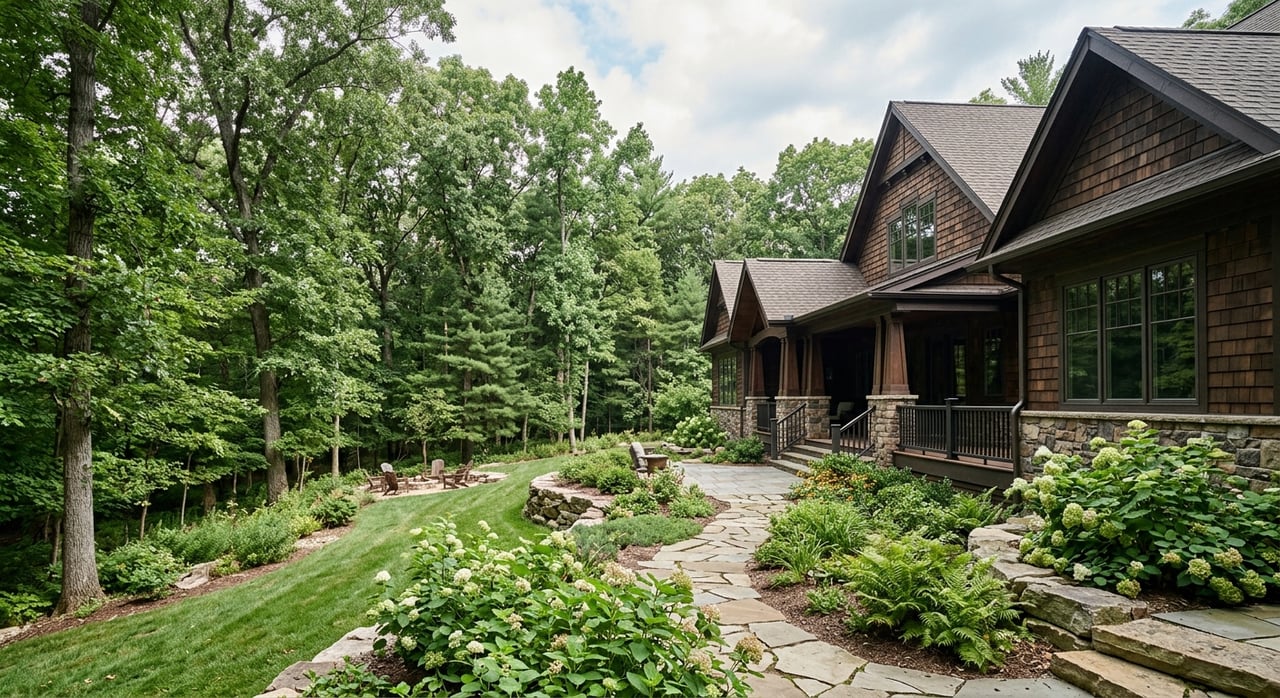
Tree cover is a major part of the Colvard Farms experience. It also comes with rules that can affect what you keep, what you remove, and how you design around the natural setting.
The ARC guidelines require approval for landscaping changes within 30 feet of road pavement. They also require approval for new trees and many plantings, and they state that removal of any tree larger than 18 inches in diameter within the rear setback requires ARC approval unless the tree is diseased, damaged, or dying.
This matters because privacy and views often pull in opposite directions. The developer’s descriptions suggest The Ridgeline offers elevated terrain with rolling woodlands, while The Lake offers a setting near a lake with open fields. Those are different privacy and view trade-offs, and each may fit a different buyer.
If you want a tucked-away wooded setting, canopy preservation may be a top priority. If you want broader sightlines and a more open backyard feel, you will want to study where that openness exists and what rules apply to changes.
Plan for outdoor living now, not later
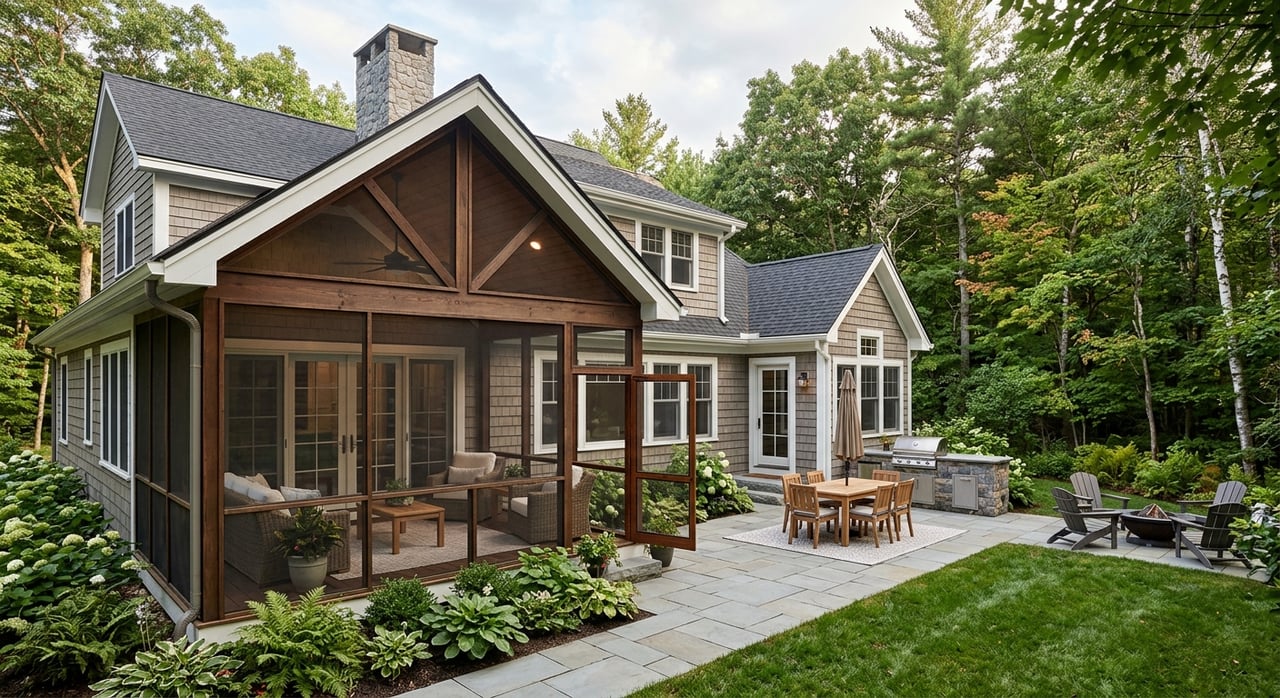
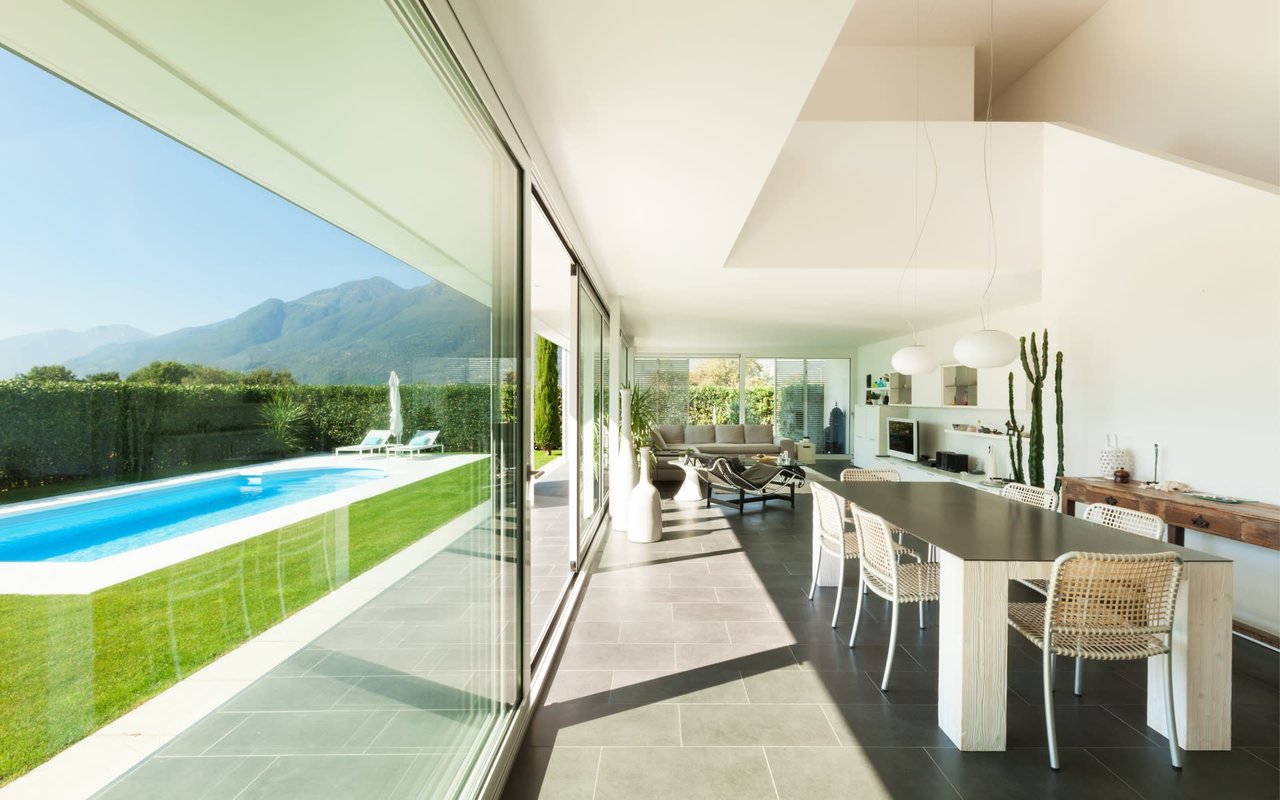
A lot that works for the house still may not work for the full lifestyle you want. If your wish list includes a pool, large patio, outdoor kitchen, or expanded porch, those elements should be evaluated before you commit to the lot.
Colvard Farms’ ARC guidelines require a plat survey with the pool location marked, a site plan showing the pool and adjoining structures, and confirmation that pool water will not be drained into a street or trail. The guidelines tie this rule to Colvard Farms’ location within the Lake Jordan Conservation District.
This is one of the clearest examples of why the prettiest lot is not always the best lot. A heavily sloped or constrained homesite may support the house itself but create expensive complications for the outdoor spaces you care about most.
Compare the two estate settings
The currently marketed estate homesites appear to offer two distinct experiences. The Ridgeline is described as elevated with rolling woodlands, while The Lake is described as adjacent to a lake with open fields.
That difference may shape everything from privacy to light to the amount of clearing or preservation you prefer. A wooded lot may offer stronger natural screening, while a more open lot may give you different long-range views and easier placement for certain outdoor features.
Neither is automatically better. The right choice depends on how you rank privacy, maintenance, topography, and the kind of home setting you want to create.
Budget beyond the purchase price
Lot selection is also a budgeting exercise. Current community information lists 2024 HOA dues at $3,080 per year, plus an additional fee for gate operation and maintenance.
Those are recurring ownership costs, not one-time closing items. If the lot also requires well and septic approvals, site evaluation, grading, drainage work, or advanced wastewater solutions, your pre-construction budget can change quickly.
A process-driven approach helps here. When you compare homesites, look beyond land price and ask what each lot may require to become build-ready for your specific plan.
Cost items to review before choosing a lot
- HOA dues and gate-related fees
- Driveway length and construction needs
- Grading and drainage improvements
- Retaining walls, if needed
- Well and septic evaluation or permitting costs
- Tree work and landscape approvals
- Pool or outdoor-living site preparation
How Colvard Farms compares nearby
If you are also looking at estate-lot communities near Jordan Lake, Colvard Farms sits on the larger-acreage, more conservation-oriented side of the market based on the research provided. The report notes that other nearby communities market smaller lot sizes or different amenity mixes.
That makes Colvard Farms especially appealing if you want more acreage, more privacy, and a custom estate setting shaped by green space and trails rather than a golf-centered layout. Buyers looking for a smaller maintenance footprint or a different amenity structure may prefer a different type of community.
This is helpful context because it reframes the lot decision. You are not only choosing between lots. You are choosing the kind of setting you want to live in long term.
A practical lot-evaluation process
When buyers approach custom lots analytically, decisions usually get clearer. Instead of asking only, “Do I like this lot?” ask, “Can this lot support the home, budget, and timeline I want?”
A simple process can help:
- Review the recorded plat and any available survey.
- Confirm setbacks, easements, and the likely building envelope.
- Evaluate orientation for light, porches, and room placement.
- Study slope, drainage flow, and driveway access.
- Verify utility setup, septic feasibility, and repair-area needs.
- Review tree constraints and canopy-preservation goals.
- Test whether your pool or outdoor-living plans fit the site.
- Estimate ongoing and pre-construction costs before committing.
This kind of review fits the way we think about real estate in the Triangle. Good outcomes usually come from clarity, process, and early identification of trade-offs.
If you are considering a custom lot in Colvard Farms, the right guidance can help you compare sites more confidently, ask better questions, and avoid costly surprises later. When you are ready to talk through your options, connect with Chris & Kevin Knapp - Main Site.
FAQs
What should you review before choosing a custom lot in Colvard Farms?
- Review the recorded plat, any survey, setbacks, easements, likely building envelope, tree constraints, utility setup, and drainage conditions before choosing the lot.
How do Colvard Farms setbacks affect a custom home plan?
- Colvard Farms covenants list 40-foot front setbacks, 15-foot side setbacks, and 50-foot rear setbacks, which can directly affect footprint, garage placement, porch design, and outdoor living areas.
Why does septic feasibility matter for a Colvard Farms homesite?
- Some homesites may involve well water and individual septic systems, and septic feasibility depends on soil, slope, available drainfield area, and space for a repair area.
What tree rules should buyers know in Colvard Farms?
- The ARC guidelines require approval for certain landscaping changes, and tree removal rules apply, including approval for removing larger trees within the rear setback unless the tree is diseased, damaged, or dying.
Can you add a pool on a custom lot in Colvard Farms?
- A pool may be possible, but the ARC guidelines require a plat survey with the pool location, a site plan showing related structures, and on-lot drainage that does not send pool water into a street or trail.
What are the current ownership costs buyers should ask about in Colvard Farms?
- Current community materials list 2024 HOA dues of $3,080 per year plus an additional gate operation and maintenance fee, so buyers should confirm those recurring costs as part of their planning.
How long can ARC review take for a Colvard Farms project?
- The covenants say the ARC must respond within 30 calendar days, and changes to approved plans must be resubmitted.