Most write-ups about the North Carolina Botanical Garden are written for someone who has never been. If you live within a few miles of Old Mason Farm Road, that version is not useful. You already know it is free, you already know where to park, and you have probably already walked the main loop with a visiting parent. The question worth answering is different: what is the garden actually doing this week that would pull you back on a Tuesday at noon.
The short answer is that the display gardens are on a schedule most neighbors never learn to read. Once you do, the case for going three or four times a summer stops being about novelty and starts being about catching specific things at their peak.
The garden is choreographed, not static
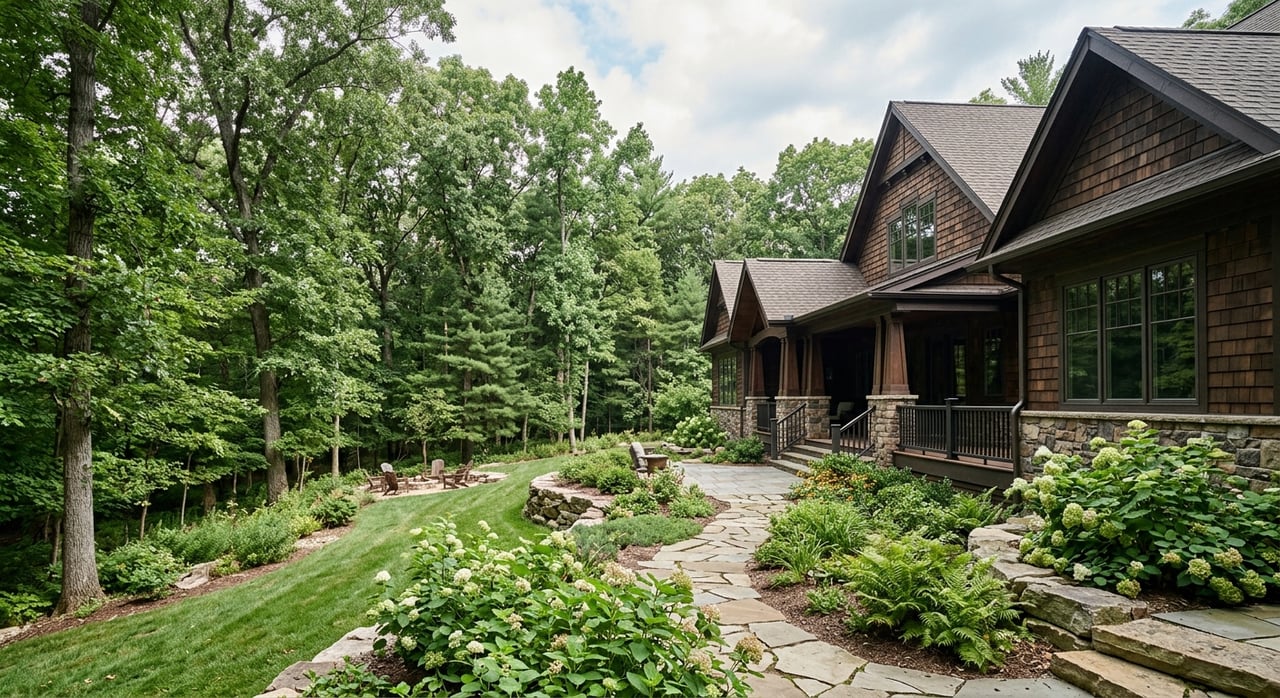
In the Perennial Circle, each month provides a different display of the garden's wildflowers, shrubs and trees native to the southeastern United States. In summer, this garden space is full of changing color. In the winter, interest shifts to discovering the architecture of stems and seeds left for their habitat and beauty. That is a curatorial decision, not an accident of weather. More than 15 display gardens show the remarkable diversity of the state's plant life, while an educational center, library, art gallery and meeting rooms underscore the Garden's mission to cultivate connections between plants, people, and place through science, engagement and conservation. Staff rotate what is featured, prune for succession, and stage the beds so that a two-week gap between visits looks like a different place.
The practical version of that for a Chapel Hill resident: you can visit every third weekend from June through November and see something meaningfully different each time. Here is a rough calendar built from what the garden itself and local coverage have flagged.
| Window | What tends to be doing something |
|---|---|
| Late June – July | Carnivorous plant collection in bloom; ferns hitting full canopy |
| August | Perennial Circle shifts to late-summer wildflowers; grasses filling in |
| Mid-September – early December | Sculpture in the Garden installations sited across the display beds |
| September – October | Swamp sunflowers, asters, goldenrod; Hearts-a-Bustin' fruiting |
| November – December | Seedheads and stem architecture; open sightlines through the habitat gardens |
None of that requires a special ticket. The Garden is free to visit during its normal hours: 9 a.m. to 5 p.m. Tuesday through Saturday, 1 to 5 p.m. Sunday.
Why the carnivorous bed earns a July trip
If you have only been once, you probably remember the Venus flytraps as a curiosity. The bed reads differently in midsummer. One Tripadvisor visitor put it plainly after a June walk: the carnivorous plants are blooming in June, and the trails have a lot of shade so it wasn't too hot even on a 93 degree summer day. That shade matters. The pitcher plants, sundews, and flytraps sit in a full-sun bog by design, but the path in and out runs through canopy, which is what makes this a legitimate July walk rather than a heat-stroke errand.
The collection is also part of a live research program, not just a display. Will climate change affect optimal burn frequency for fire-dependent species like the Venus flytrap? We're collaborating with researchers at Kansas State University and Duke University to understand this question and make science-based recommendations for land managers. The garden treats the bog the way a working lab would, which is why the plants keep looking the way they do.
The 2026 wildflower is a fall payoff worth pre-loading
The 2026 NC Wildflower of the Year, big-headed aster (Symphyotrichum grandiflorum), is a real showstopper! Native only to the Piedmont and Coastal Plain of North Carolina and Virginia, big-headed aster is often found in sunny, dry woodlands and roadsides. The Wildflower of the Year is a joint program: the North Carolina Botanical Garden and The Garden Club of North Carolina are co-sponsors of the North Carolina Wildflower of the Year program. This conservation project was initiated in 1982. The project's aim is to actively promote throughout the state and region an attractive plant that is native to the southeastern United States.
For a resident, this is the reason to stop by the exhibit hall now rather than in October. The garden typically ties a free seed packet to the Wildflower of the Year at its exhibit hall, and the aster itself blooms late. Pick up the brochure in July, sow in fall, and you will have a plant in your own yard that mirrors what is happening inside the Piedmont Habitat next season.
Sculpture in the Garden will change the same walk you already know
The 38th installment lands this fall. Last year, the 37th Annual Sculpture in the Garden show is taking place at North Carolina Botanical Garden, 100 Mason Farm Road (on the UNC Chapel Hill campus) from September 14 to December 7, 2025. Expect a similar mid-September to early-December window this year, with a similar footprint: the show features nearly 90 sculptures by 66 artists. The sculptures are spread out across the display gardens, so it's a great chance to explore the gardens and enjoy the fall weather.
The reason to care, if you already walk here, is that the exhibit collapses the "have I seen this?" instinct. Communications and Exhibits Coordinator Emily Oglesby framed it directly in The Local Reporter:
"Displaying sculptures in a garden, especially over a period of several months, makes for an ever-changing exhibit. Now, in mid-October, entirely different plants are blooming than when the exhibit opened a month ago. By the end of the show in December, the landscape is much more open and barer than the lush summer greenery that ushered it in."
Same trail, three different walks. That is the argument for a fall membership calendar rather than a single Saturday drop-in.
The noon habit most neighbors miss
The garden's Hybrid Lunchbox Talks are the most under-used feature for people who work from home nearby. They run midday, they are hybrid so you can join from your kitchen if you cannot walk over, and the topics rotate. The current calendar lists sessions like Hybrid Lunchbox Talk: If Not Us, Who? Rebuilding Botanical Capacity for the Southeast alongside The Botanical Time Machine: 50 Years of Acclimation in the Guadalupe Mountains. A recent Thursday session brought in Jillian De Gezelle, ethnobotanist and teaching associate professor at North Carolina State University. Biocultural diversity conservation is an approach to conservation that centers the deep relationships between human cultures and the natural world. Dr. De Gezelle will share more about this practice and about how it's critical for the health of both humans and ecosystems.
Two other resident-scale tools worth knowing:
- The Daily Plant Sale. Located outside the Garden Shop, the Daily Plant Sale features a rotating selection of southeastern native plants grown right here at the NCBG nursery. Openings include favorites like wild ginger, summer phlox, spreading Jacob's-ladder, eastern red columbine, northern spicebush, yellow buckeye, and Carolina jessamine, along with spring ephemeral wildflowers rarely offered for sale like trout lilies, trilliums, and mayapples. If you have a shady side yard you have been ignoring, this is a better first stop than a big-box nursery.
- FloraQuest. FloraQuest: Carolinas & Georgia is available now for iOS and Android devices. This plant identification and discovery app from the UNC Herbarium and the North Carolina Botanical Garden covers every wild-growing plant species in North Carolina, South Carolina, and Georgia. Take it on any trail walk and the display gardens start doubling as a study guide.
The garden is bigger than the garden
The main site is the front door, not the footprint. NCBG stewards over 1,200 additional acres of gardens and natural areas around Chapel Hill, including Coker Arboretum, Battle Park, and Mason Farm Biological Reserve. A few specifics worth stitching into a resident's mental map:
- Coker Arboretum on central campus, planted starting in 1903 by botany professor William Chambers Coker, is the origin point of the whole institution and now a popular ceremony site.
- Battle Park is 90 acres of forest land in the center of Chapel Hill, with trails that connect to the campus edge.
- Mason Farm Biological Reserve covers 367 acres of natural area and requires a permit, which is worth pulling once if you like quiet birding walks.
The Allen Education Center itself, where the main entrance and gift shop sit, is designed by architect Frank Harmon, the first LEED Platinum certified state-owned building or public museum in North Carolina. Worth a look on the way in even if you skip the exhibits.
A 45-minute weekday loop
If you have one lunch hour and no plan, this works:
- Park at the Allen Education Center off Old Mason Farm Road.
- Ten minutes in the carnivorous bed and the adjacent Courtyard Gardens, where the rare smooth purple coneflower can be found in the Courtyard Gardens and Piedmont Habitat. The Piedmont Habitat features wildflower and grass species native to the southeastern Piedmont.
- Fifteen minutes on the Piedmont Nature Trail behind the display gardens.
- Five minutes in the DeBerry Gallery, which hosts rotating exhibits of nature art and natural landscape subjects. Exhibits change every two months and feature work by local artists in a variety of media.
- Five minutes at the Paul Green cabin in the Mountain Habitat, the cabin where renowned North Carolina playwright, activist, and naturalist Paul Green did much of his writing. The cabin was moved to the Garden and restored in 1991.
- Ten minutes at the Daily Plant Sale on the way out.
Do that twice a month from July through November and you will know this place the way you know your own street.
If you are settling into a home nearby and want the same kind of practical, texture-first read on the streets and neighborhoods around the garden, Agile Property Management publishes local guides and works with residents, buyers, and long-term owners across the Chapel Hill side of the Triangle. Start a conversation when you are ready.